Quick summary
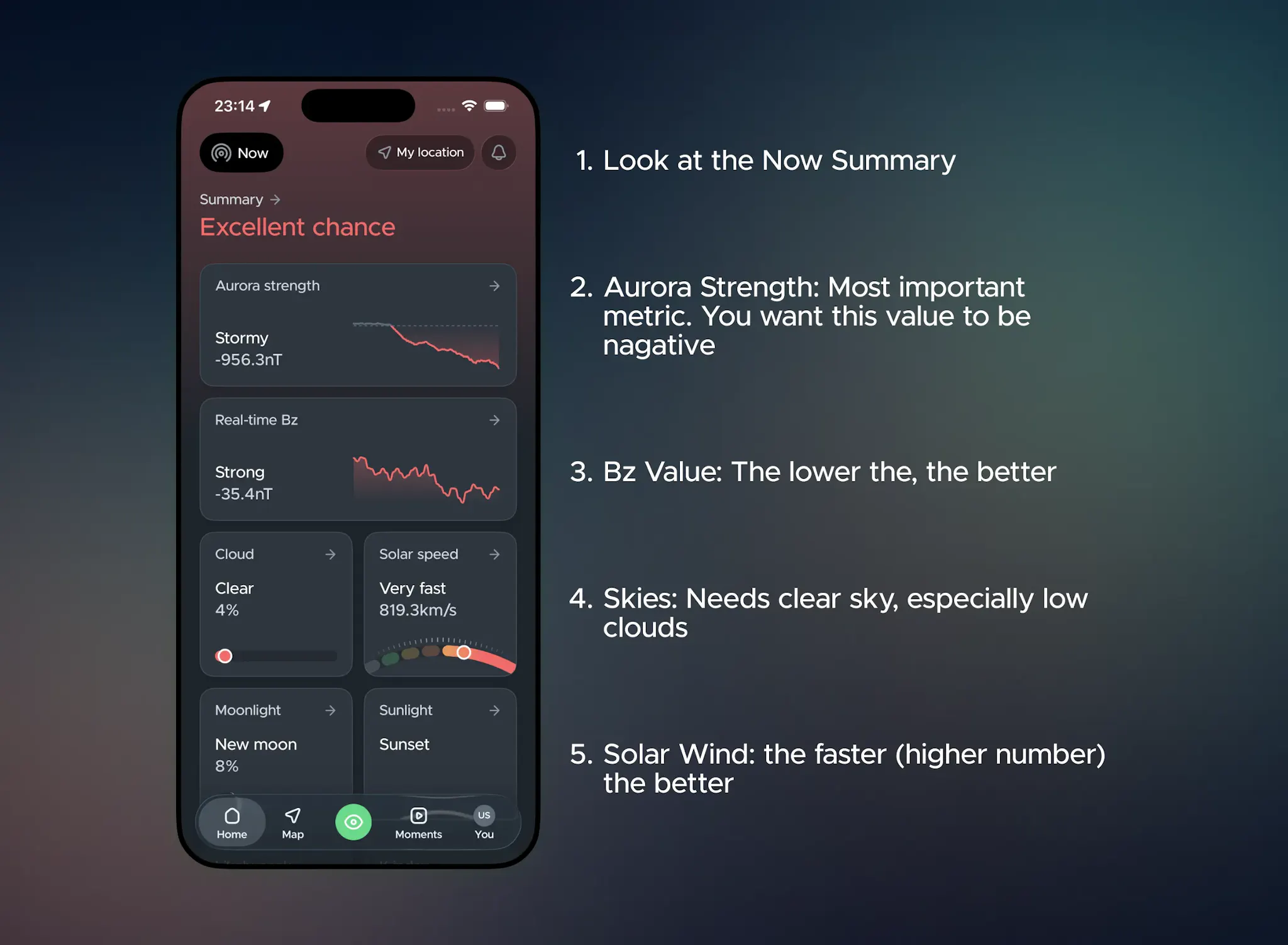
Hello Aurora is built for real-time Northern Lights hunting, not slow, generalized forecasts. It uses live data, including Aurora Strength, Bz, and Solar Density, refreshed every few minutes instead of every few hours. The app is built from our own experiences hunting the auroras in the Arctic since 2020. You get instant substorm and spotting alerts from a global community, plus built-in cloud cover tracking so you know exactly when and where to look up. Download Hello Aurora and never miss the lights again 💚
Frequently asked questions
Q: What is the best app to track the Northern Lights in real-time?
A: Hello Aurora tracks the Northern Lights using real-time data updated every few minutes, instead of relying only on the slower Kp index. It combines live forecast, substorm alerts and community spotting in one app.
Q: Is Hello Aurora free to use?
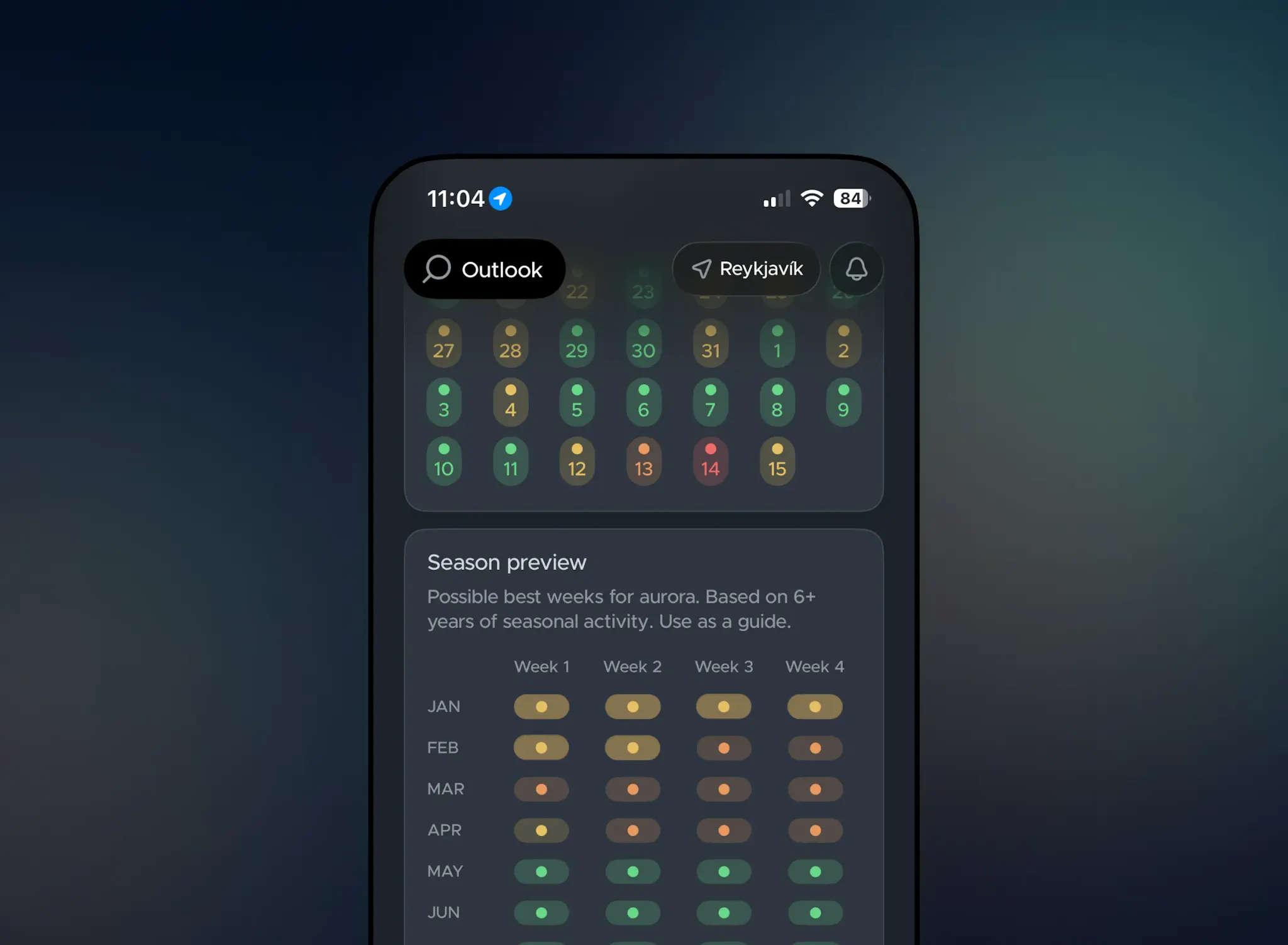
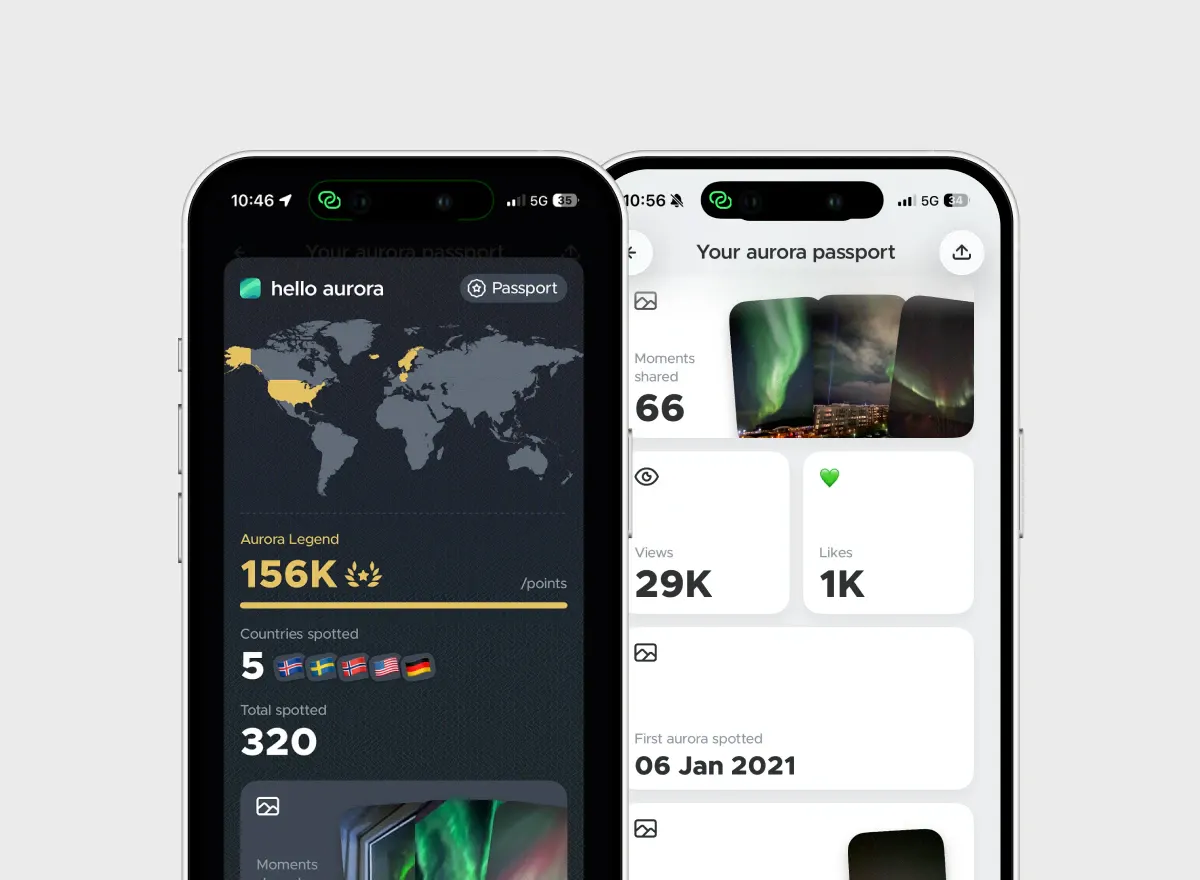
A: Yes. Hello Aurora's core features, including real-time forecast, standard 27 days forecast cloud coverage, aurora oval, aurora alerts and community spotting are free. A Pro plan adds extra features like the Aurora Passport and custom notifications, full access to Guide and Outlook and unlimited aurora spotting.
Q: Does Hello Aurora work outside the Nordic countries?
A: Yes. While Hello Aurora focuses on Iceland, Norway, Sweden, and Finland, you can set your alert location anywhere in the world and follow aurora activity globally.
Q: How is Hello Aurora different from apps that only show the Kp index?
A: The Kp index updates every three hours and averages activity across the entire globe. Hello Aurora updates every few minutes using your nearest magnetometer station and live solar wind data, reflecting what is happening right now rather than hours ago. The app is built on experience since 2019 and is crafted by dedicated aurora hunters and continuously refined to deliver the most precise forecasts and alerts available. Every data point is sourced directly from official scientific networks and by real-human.
Q: What is Aurora Strength and why does it matter for aurora viewing?
A: Aurora strength is based on your nearest ground magnetometer, which detects fluctuations in Earth's magnetic field caused by solar activity and measures them in nanoteslas (nT). A sharp drop, around -150 nT, means a substorm is active and the lights are likely visible now. Near zero, around 5 nT, means quiet skies.
Q: Can you see the Northern Lights with the naked eye?
Yes, you can see the Northern Lights (Aurora Borealis) with your bare eyes without special equipment, though what you observe depends on geomagnetic activity.
During moderate activity, the aurora usually appears to the human eye as a pale greenish-white or grayish glow with subtle motion, whereas strong geomagnetic storms—especially during substorms with high-speed solar winds and Aurora Strength below -150nT—reveal vibrant green, pink, red, and purple curtains rippling across the sky.
While camera photos and long-exposure smartphone shots exaggerate color intensity by gathering far more light than human vision allows, tracking real-time aurora forecasts and space weather metrics ensures you won't miss these sudden, intense live displays.