
Features
What you will get with the app
Aurora forecast
Real-time, 27-day, and seasonal outlook forecasts, plus last night’s summary.
Alerts
Aurora alerts & real-time Northern Lights sightings
Northern Lights map
Where to see the Northern Lights tonight
Aurora moments
Live Northern Lights sightings & real-time aurora report
Aurora passport
Track your Northern Lights sighting journey
All features
Everything the app can do
Aurora Forecast
Hello Aurora analyzes real-time solar activity, local weather, and cloud cover to predict actual visibility at your location. Get a local and up-to-the-minute forecast for your Northern Lights trip tonight!
The complete aurora timeline
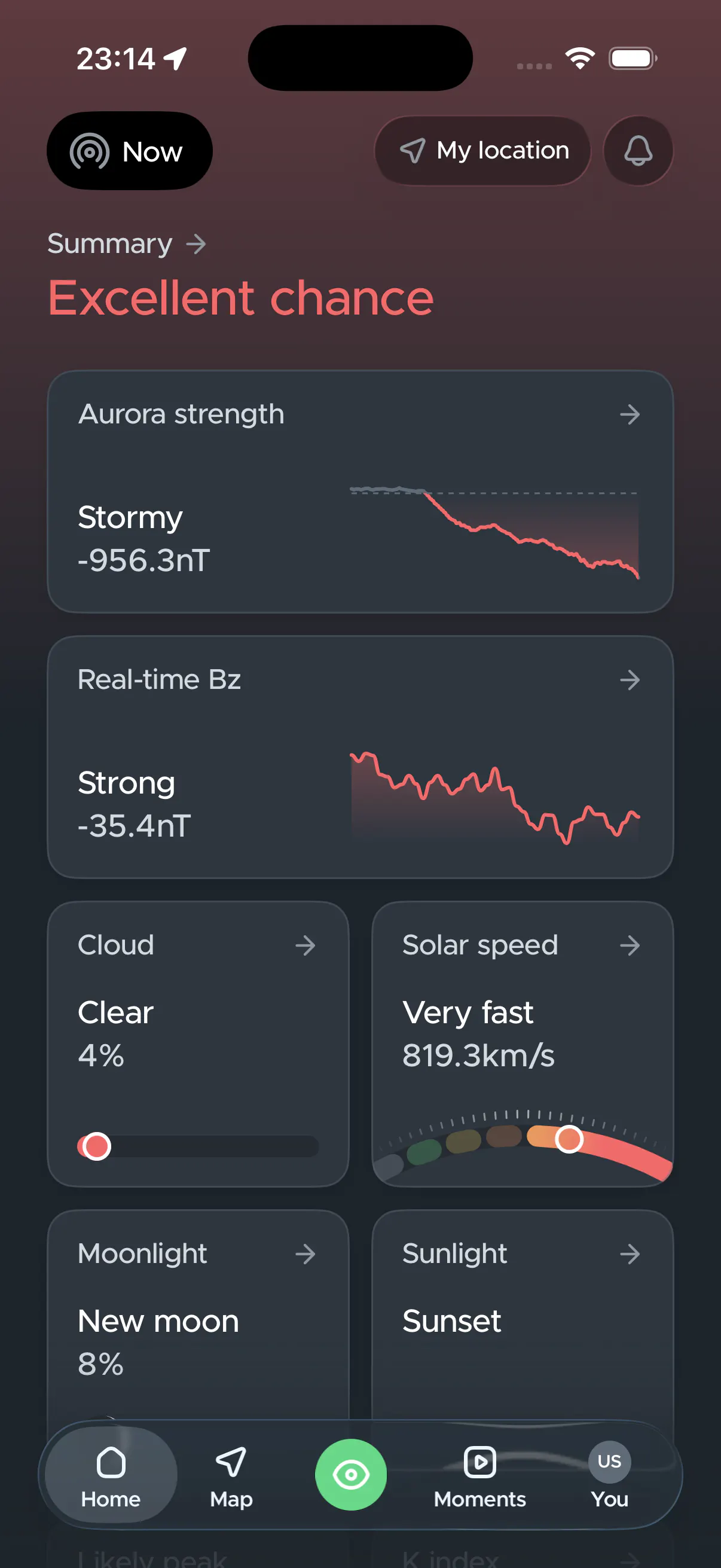
Explore real-time aurora forecast, 27-day, 12 months outlooks and last night’s summary.
Real-time aurora forecast for today
Get up-to-the-minute visibility tracking, live solar activity and local cloud cover for tonight's display.
Future Northern Lights prediction
Use our 27-day guide and seasonal outlook to plan your trip. Estimate upcoming viewing conditions using last solar cycle trends, NOAA's 27 days forecast paired with over six years of our own data.

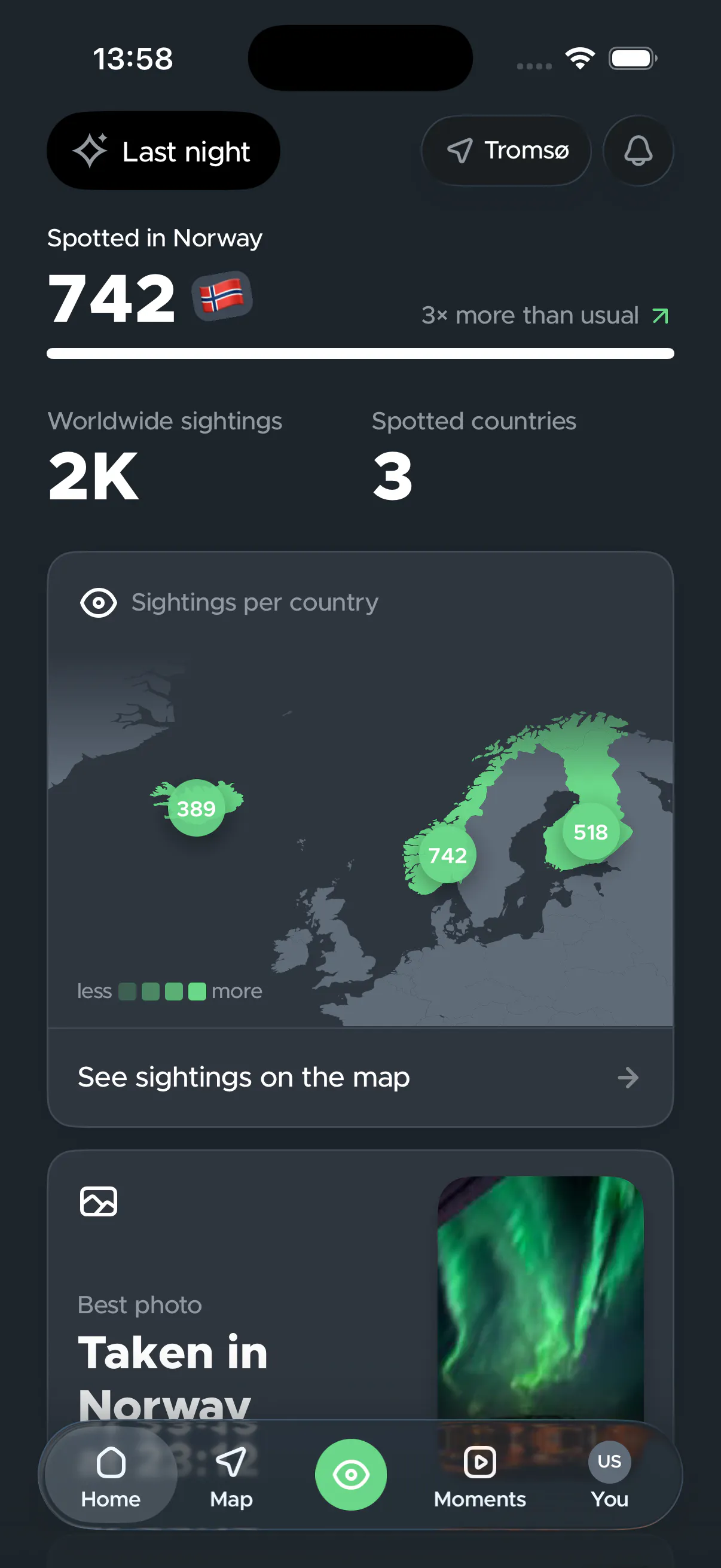
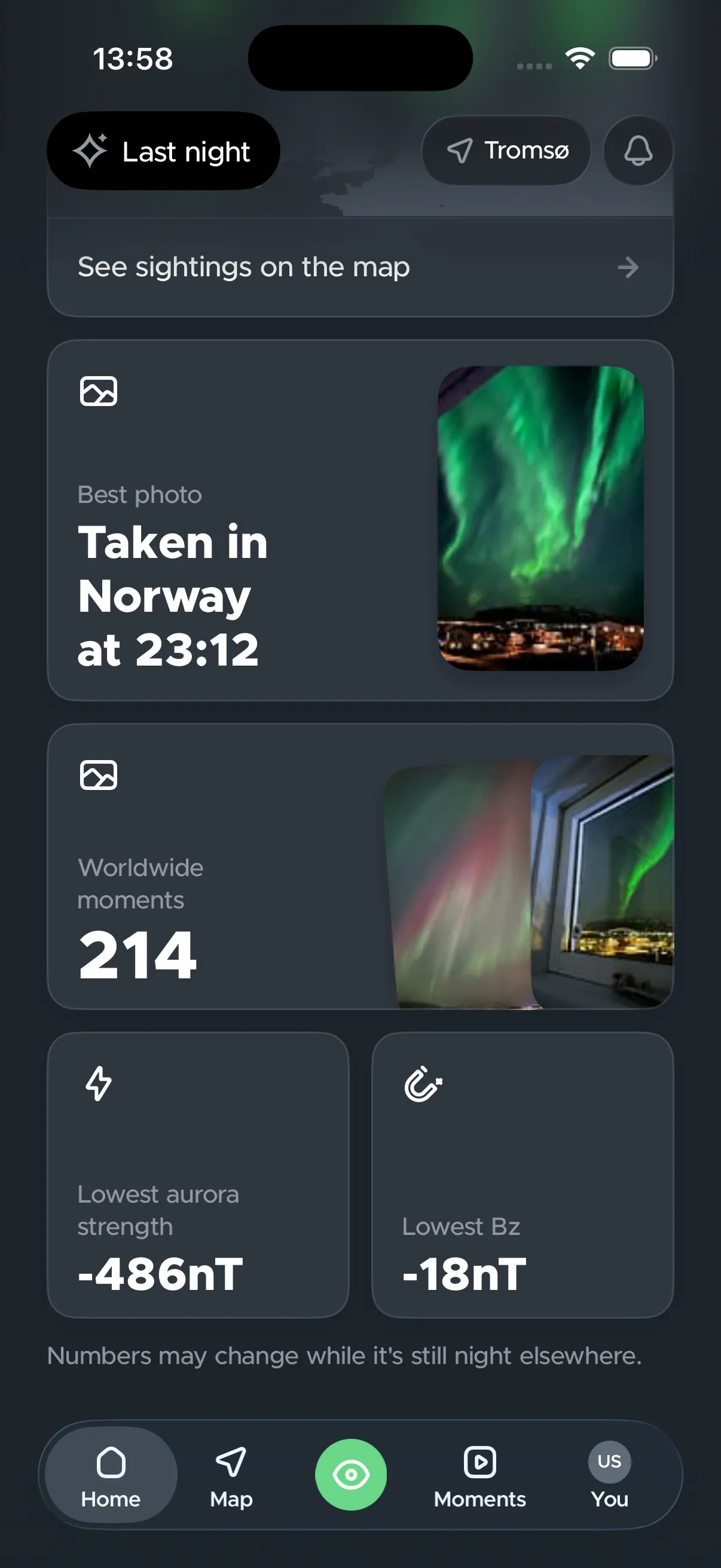
Aurora last night summary
Review morning-after highlights, total sighting reports, activity maps, and top community photos.
Today's aurora forecast
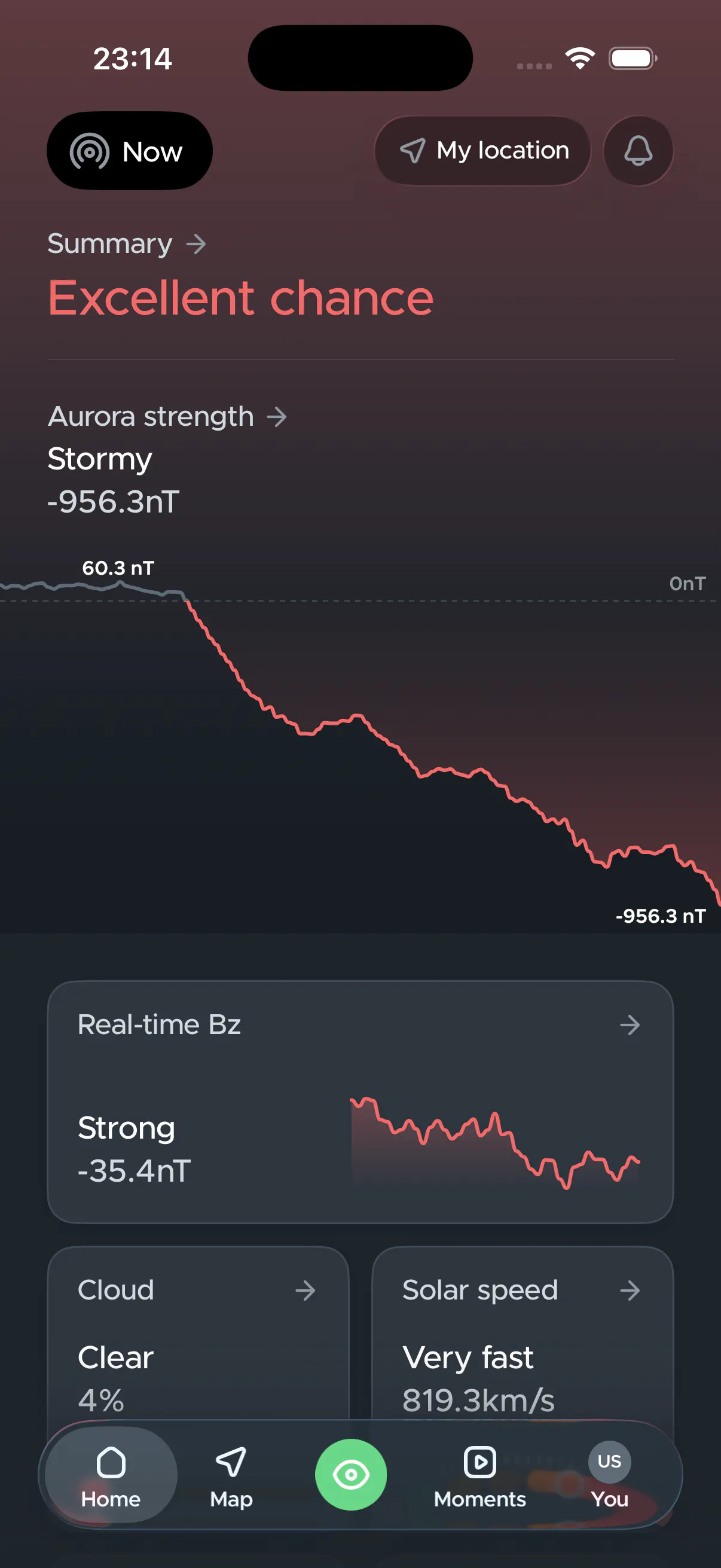
Get simple, real-time aurora metrics tailored to your local conditions tonight. Tap any card on the app to see data and clear explanations for Aurora Strength, Bz, Cloud Cover, Solar Speed, Moonlight, Sun, Peak Hours and Kp Index.
Real-time forecast
Track real-time aurora forecasts refreshed every few minutes. Get access direct geomagnetic streams straight from trusted space weather agencies.
Peak viewing window of the night
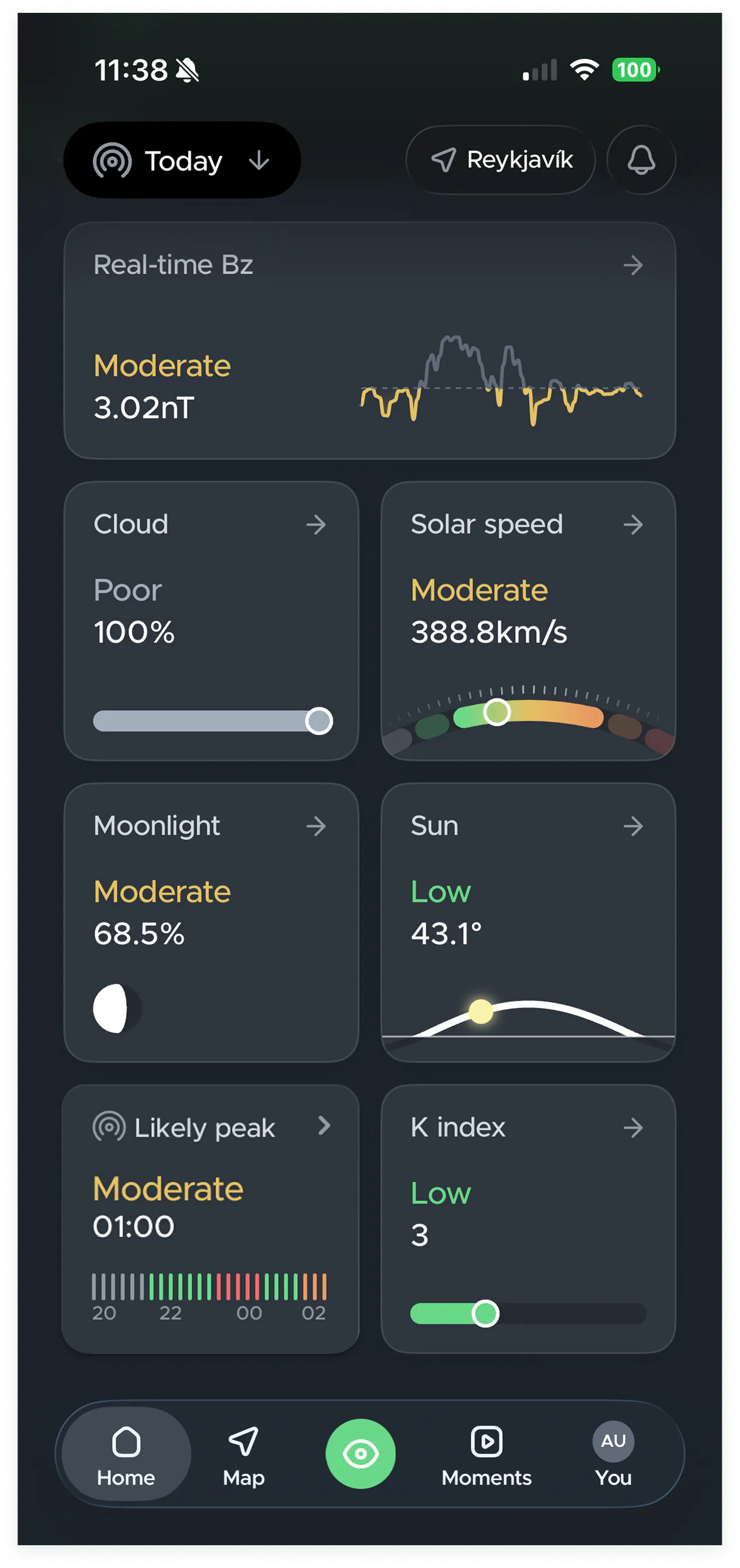
Pinpoint today's best times to step outside based on real-time community sightings and live activity trends.
Northern Lights metrics you'll need
Metrics that tells you the current activity of your sky
Aurora Chance
See how likely you are to see the Northern Lights right now. Hello Aurora processes five live space weather and local weather condition, updated every few minutes for your location.
Aurora Strength
Aurora Strength is the most critical metric for tracking aurora brightness. Follow live, minute-by-minute updates in the app to know the exact moment the sky comes alive.
Real-time Bz
Bz shows the direction of the magnetic field from space. When the value is negative, it connects with Earth’s magnetic shield to create the exact conditions needed for the Northern Lights. Watch this number update minute by minute to catch real-time changes.
Solar Speed
Solar speed is a stream of energetic particles flowing outward from the sun. The faster the speed, the brighter and stronger the aurora display. Track live solar speed updates in real time to know when conditions peak.
Moonlight
Darker skies give you the best aurora views. Check tonight's moon brightness for your area to know if the sky is dark enough for a show.
Sun
The Northern Lights are easiest to spot in complete darkness. Track live daylight for your location to know if the sky is dark enough.
Peak hours
See peak aurora viewing times in your area based on the last solar cycle to see when the Northern Lights appear most often in your location.
KP index
KP index shows how far south the Northern Lights might reach. Because it updates every 3 hours using global stations, it is less useful if you are already in the Arctic. However, it is a great indicator if you live further south. Check the Kp in the app.
Plan your future Northern Lights trip
Forecast upcoming activity up to 27 days early and pinpoint the best viewing weeks of the year based on 6 years+ of seasonal activity.
27-day guide
Estimate how promising the future day looks. Plan ahead with a long-range aurora guide up to 27 days in advance.

Seasonal outlook
Identify the best week of the year for aurora viewing to plan your trip. Predict future sightings using historical solar cycles and 6+ years of our own data.
Last night's summary
Community sighted & reach
See the exact volume of community sightings logged overnight and track how many countries witnessed the Northern Lights display.
Activity map and peak real-time metrics
Explore an interactive breakdown mapping sighting locations and Moments. Check vital stats, including minimum aurora strength and Bz level from last night
What other aurora hunters say
The best northern light app! A lot of parameters to check and good explanations! Also the UI is very nice! Five stars!
Excellent app, with all the important information and above all an active community that lets you know thanks to notifications if the aurora has been seen in your area
Extremely accurate updates often lots of info
Best aurora forecast app
I do love this app. I love Aurora to bits so to see as and when the reports come in with images is perfect. The spaceweather models can tell you one thing but you need eyes on the ground (looking to the sky) to confirm. The App also makes reporting of your sighting quick and easy.
Superb app. The interface is clear and user-friendly. It allowed us to see the Northern Lights from Swedish Lapland. Well done!
The Northern Lights, also called Aurora Borealis, happen when solar wind particles hit atoms in Earth's magnetosphere. This pushes electrons in those atoms to a higher energy level. When the electrons drop back down, they release light. That light show is the aurora.
Auroras are active all year. But you can only see them when the sky is dark enough, so winter is the best season to travel.
The best places to see them sit near the Arctic circle, above 60° latitude. This includes Norway, Sweden, Finland, Iceland, Canada, Russia and Alaska.
A beginner's guide to chasing the Northern Lights
Seeing the Aurora Borealis is a bucket-list experience, but it requires being in the right place at the right time. To maximize your chances, you need four key ingredients:
- Clear skies: Clouds will block your view.
- Strong solar activity: The sun needs to be active enough to fuel the lights.
- Darkness: You need to get away from bright city light pollution.
- Good timing: To give yourself the best shot, travel to the Aurora Zone. This includes the northern parts of Norway, Sweden, Finland, Iceland, Canada, and Alaska.
Hello Aurora keeps aurora lover ahead with real-time data, personalized alerts, and global sightings.
Frequently asked questions
Q: How far in advance can you accurately predict the Northern Lights?
A: The most reliable forecast is always on the day of your hunt because real-time metrics measure live activity. We recommend using long-range forecasts as a general guide and re-checking conditions on the night you go out.
Q: What time of night is the aurora most active?
A: The Northern Lights are most visible during pitch-black nights under clear skies. Activity peaks when high solar activity aligns. To help you plan, Hello Aurora calculates Peak Hours using historical sighting trends from previous solar cycles. You can see the best hours of the day on the Today's tab on the app.
Q: What Kp index do I need for my location?
A: It depends on your latitude. Aurora hunters in Arctic regions like Iceland or northern Scandinavia do not need to monitor the Kp index. Instead, rely on real-time metrics like Aurora Strength and Bz direction to judge local activity.
Q: Can you see the aurora through clouds?
A: Thick cloud cover is your primary obstacle, but powerful aurora displays can still show through thin gaps. To maximize your chances, travel to areas free of low-altitude clouds that block the sky. Use the cloud coverage on the Map tab to see cloud progressions.
Q: Why should you not rely on the Kp index in the Arctic?
A: The Kp index measures global magnetic activity to show how far south auroras might spread. If you are already located directly under the auroral oval, local metrics like Aurora Strength and Bz provide far better accuracy.
Q: Why should you use Hello Aurora?
A: Hello Aurora tracks space weather metrics that directly impact your location. By connecting to your nearest local magnetometer, our app combines real-time solar data with local cloud cover to give you the forecast of tonight’s sky.
Get started
Don't wait any longer, download
hello aurora and start exploring!