How to See the Northern Lights: The Best Way in 2026

Blog

How to See the Northern Lights: The Best Way in 2026's cover picture

The best way to see the Northern Lights is real-time forecasts, dark skies and good timing. Here is how to plan your trip with Hello Aurora.

The best way to see the Northern Lights starts with three things: dark skies, clear weather and real-time data. Chasing aurora by luck alone rarely works. This guide covers exactly how to see the Northern Lights, from picking a destination to reading the sky like a local.

Choose the best Northern Lights destinations

Where to go

Your best chance is a location inside the aurora zone near the magnetic north pole. The most reliable Northern Lights destinations are:

  • Iceland - Reykjavik and the Golden Circle but you can see the aurora in all area of Iceland
  • Norway - Tromsø, Lofoten Islands, and Alta
  • Sweden - Kiruna and Abisko National Park
  • Finland - Lapland and Rovaniemi
  • Alaska - Fairbanks and Denali National Park
  • Northern Canada - Yukon and Northwest Territories

Pro tip: Find elevated locations with clear northern views, such as hilltops or open fields. The aurora can be visible even when it's 1000 km away from your location.

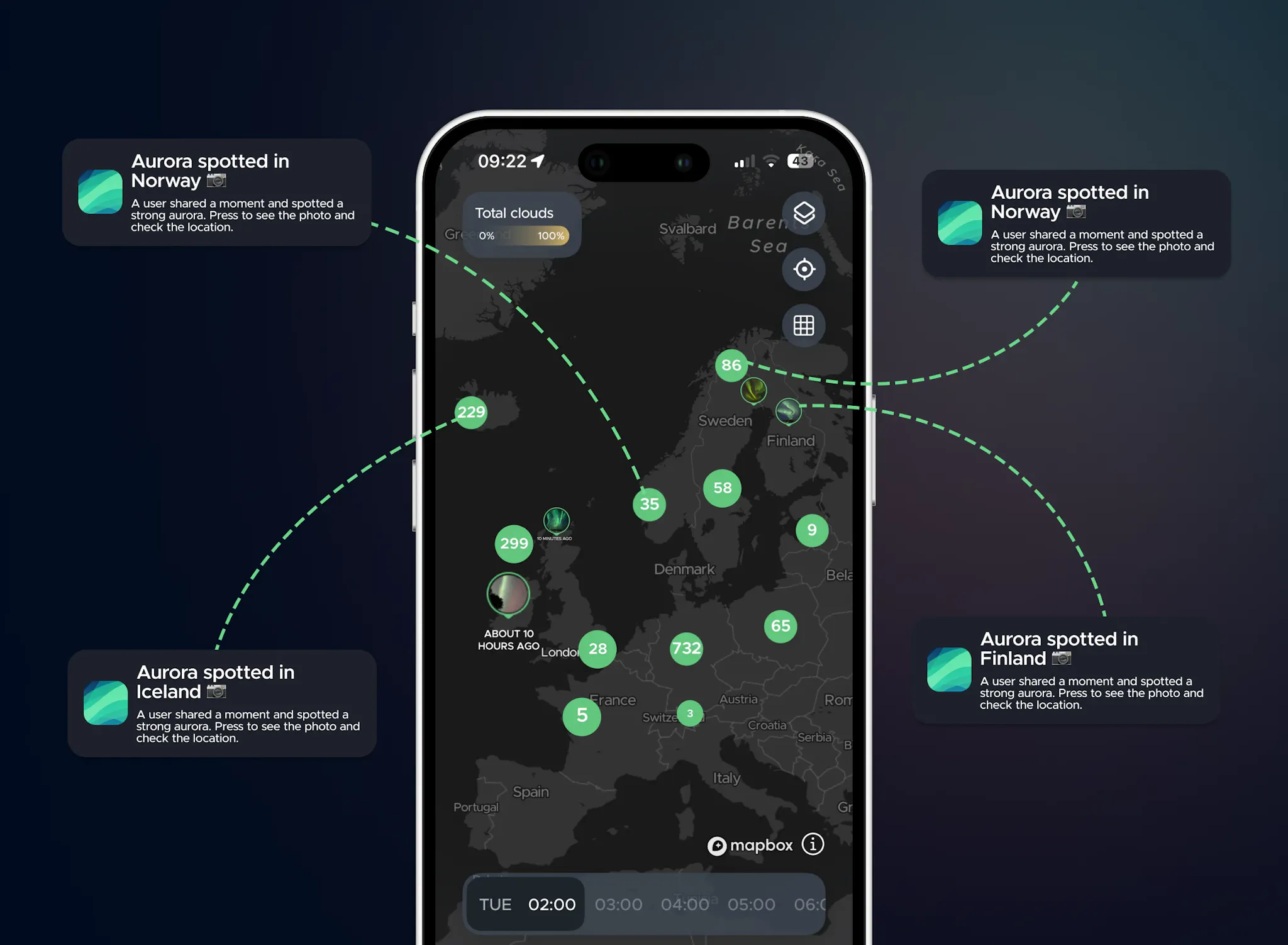
Use the Hello Aurora app to track and see where other aurora hunters are spotting the lights and save these locations for your Northern Lights trip.

Step-by-step guide illustrating how to effectively see and track Northern Lights activity in Tromsø, Norway.

Users can see the aurora hotspot location on Hello Aurora app and save the location for their aurora hunting trip

Find the best time to see the Northern Lights

Aurora activity happens year round, but you can only see it when the sky is dark enough. In the Nordic countries, the season runs from late August through April.

Peak aurora months

September through March offer the best balance of darkness and aurora activity. During equinoxes (September and March) are special because the solar wind interactions with Earth's magnetosphere create stronger geomagnetic storms, producing more spectacular auroras.

Keep in mind that daylight hours change rapidly during spring and fall equinoxes, so plan accordingly for your aurora hunting schedule.

Read our month by month Northern Lights visibility breakdown.

Get away from light pollution

You do not need total darkness, but it helps a lot. Stay away from city lights, streetlamps and bright moonlight when you can.

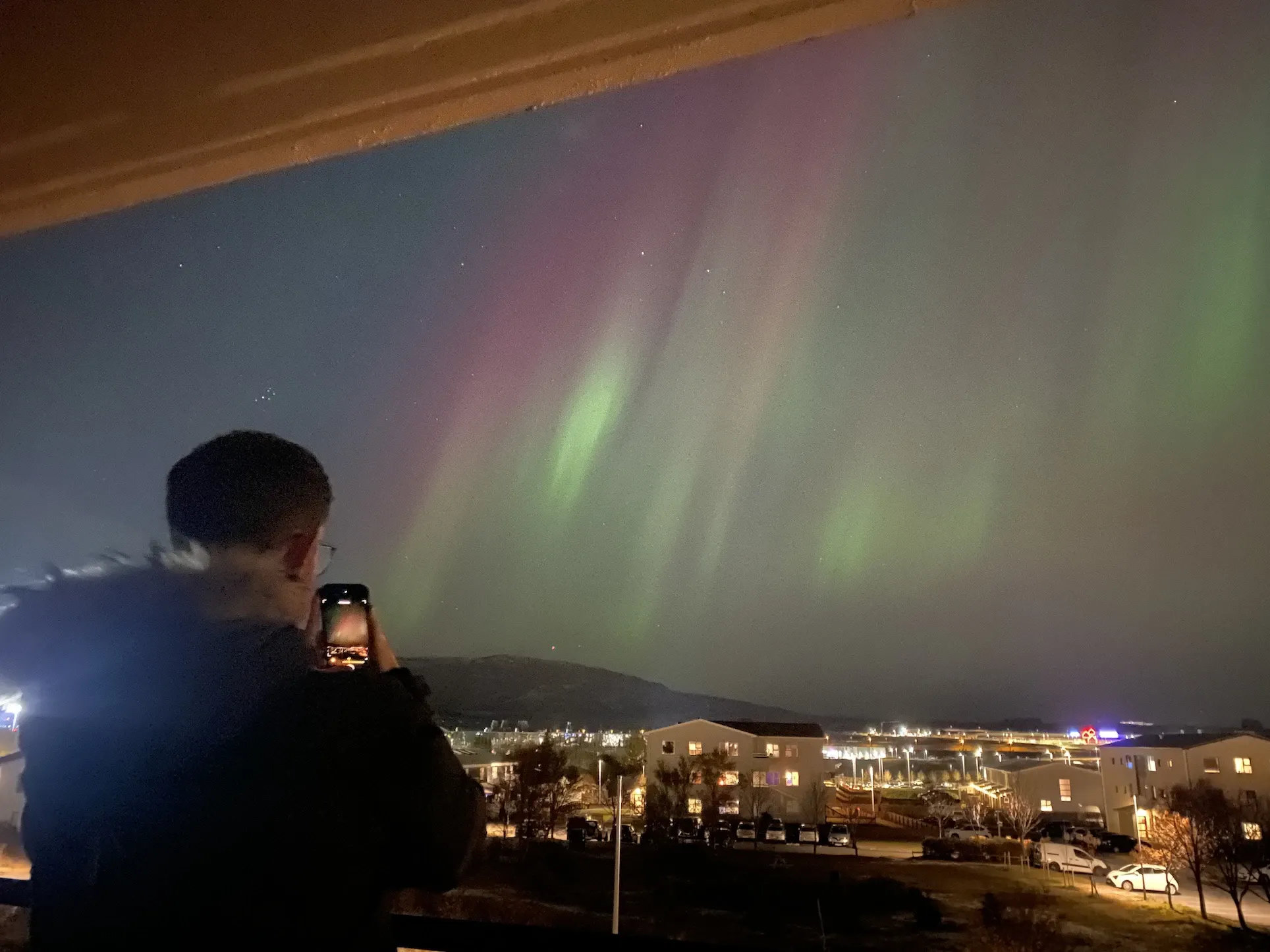
Can you still see the Northern Lights from a city? Yes. Under strong conditions, aurora is visible even from Reykjavik. Many Hello Aurora users have spotted the lights right from their accommodation. Rural spots with minimal light pollution will still give you the clearest, most colorful view.

A man taking a photo of aurora infront of him using smartphone

Can I see the Northern Lights in city? yes you can. When the condition is right you can easily spotted the aurora from the city. Many of Hello Auroa users spotted the Northern Lights from their home.

Check the weather, not just the forecast

Cloud cover is the biggest reason people miss the aurora, even when activity is strong. A perfect geomagnetic forecast means nothing under a thick cloud layer.

Hello Aurora shows live cloud coverage maps across Northern Europe, so you can find a clear gap in the sky before you commit to a viewing spot. Always check both the aurora forecast and the cloud map together.

Stop relying on the KP index

The KP index gets mentioned everywhere, but it is a 3 to 6 hour average, not a live reading. You can easily see the aurora during a low KP window, or miss it during a high KP forecast because of cloud cover or shifting solar wind.

A more accurate approach looks at real-time geomagnetic data. Hello Aurora tracks Aurora Strength, which is based on live magnetometer readings, along with Bt and Bz. These measure the total strength and direction of the Interplanetary Magnetic Field (IMF), the stream of charged particles from the sun that drives the aurora. A southward Bz usually means a stronger, more visible display. Combine that with your local cloud cover, and you get a far more reliable read than KP alone.

Use real-time alerts instead of guessing

Do not sit outside all night refreshing an app. Turn on push notifications and let the data come to you. Hello Aurora alerts you when:

  • Aurora activity increases in your area
  • Someone nearby spots the aurora and shares it
  • Geomagnetic conditions improve enough to head outside

Pro users get precise, kilometer-based alerts in real time. Many people have caught a full display just from a notification while sitting at their hotel.

Enable aurora alerts and notifications

Northern Lights forecast apps

Don't rely on constant monitoring, let technology work for you! Enable push notifications on Hello Aurora. It will give you aurora alerts and let you know when:

  • Aurora activity increases in your country
  • Someone spots the aurora nearby your location
  • Geomagnetic conditions improve
  • Pro version benefits: Upgrade for precise kilometer-based alerts and real-time notifications. Many users discover aurora displays from their accommodations thanks to these timely alerts 💚
Hello Aurora app send you notifications the moments someone spotted the Northern Lights

Get instant Northern Lights alerts from Hello Aurora. Users will be notified when the lights is visible in their location. The alerts help you track the aurora and maximise your chance of seeing it.

Northern lights tours

Should you book a Northern Lights tours?

Professional tours significantly increase your success rate, especially for first-time visitors or those with limited time. Benefits include:

  • Expert local in the location
  • Transportation to optimal viewing locations
  • Many operators offer refunds if aurora isn't visible

If you have flexibility and transportation, Hello Aurora is widely loved by those who wants to hunt the lights by themselves.

Final tips for northern lights success

Aurora photography

Bring a tripod and camera capable of manual settings for stunning Northern Lights photos. Sometime what you think is cloud, when capture with camera could be the Northern Lights. Best way to check if this is a Northern Lights is try to take photos to see if you see green lights. If you do not have a professional camera, you can take aurora photos with smartphones too!

Patience is key

Aurora displays can be unpredictable. Some shows last minutes, others persist for hours. So dress warmly. Arctic temperatures can be brutal during peak aurora season. Layer up and bring hand warmers! The best aurora experiences often happen spontaneously when conditions align perfectly.

Ready to start your Northern Lights adventure? Download aurora tracking apps, check the forecasts, and prepare for one of nature's most incredible displays.

Summary

The best way to see the Northern Lights comes down to picking a dark, open location in the aurora zone, watching real-time data instead of the KP index, and pairing it with a clear cloud forecast. Hello Aurora brings the forecast, alerts and a community of aurora spotters into one place, so you spend less time guessing and more time watching the sky.

Frequently Asked Questions

Q: What is the best way to see the Northern Lights?
A: Head to a dark location inside the aurora zone, check real-time Aurora Strength and cloud cover together, and turn on alerts so you know the moment conditions improve.

Q: How to see the Northern Lights if I am new to aurora hunting?
A: Start with a well-known destination like Tromsø, Abisko or Reykjavik, download Hello Aurora for live forecasts and alerts, and consider a guided tour for your first trip.

Q: What is the best time of year to see the Northern Lights?
A: Late August through April, with September and March often producing the strongest displays around the equinox.

Q: Do I need to travel far from cities to see the Northern Lights?
A: Not always. Strong displays can be visible even from Reykjavik, but rural areas with less light pollution give you a clearer, more colorful view.

Q: Should I trust the KP index for Northern Lights forecasts?
A: No. It is a multi-hour average, not real-time data. Real-time Aurora Strength, Bt and Bz readings combined with local cloud cover give a much more accurate picture.

Share

Get started

Don't wait any longer, download hello aurora and start exploring!