Finland
Finland provides exceptionally stable, dry winter weather, resulting in fewer cloudy nights compared to coastal regions. Finnish Lapland, specifically the towns of Rovaniemi, Ivalo, and Kittilä, is famous for its specialized aurora infrastructure, such as heated glass igloos that allow travelers to monitor the sky in comfort.
Sweden
Sweden features a world-renowned natural phenomenon known as the "blue hole" over Abisko National Park. The surrounding Scandinavian mountains create a unique microclimate and rain shadow, keeping the sky above Abisko statistically clearer than almost any other European Arctic site. Travelers frequently base themselves in Kiruna or Abisko between October and March to maximize night sky clarity.
Alaska (United States)
Alaska stands as the premier destination for Northern Lights viewing within the United States. The interior city of Fairbanks is globally recognized for its exceptional tracking probability due to its low coastal moisture and position directly under the auroral zone.
Canada
Canada boasts vast, unpolluted wilderness stretches across its northern territories, offering some of the darkest skies on Earth. Whitehorse in the Yukon Territory and Yellowknife in the Northwest Territories are top global hotspots for dedicated viewing programs. The continental climate of northern Canada produces incredibly dry, crisp winter air, resulting in high sky clarity that extends the viable tracking season from late August all the way into mid-April.
What time of night is best to spot the Aurora during peak months?
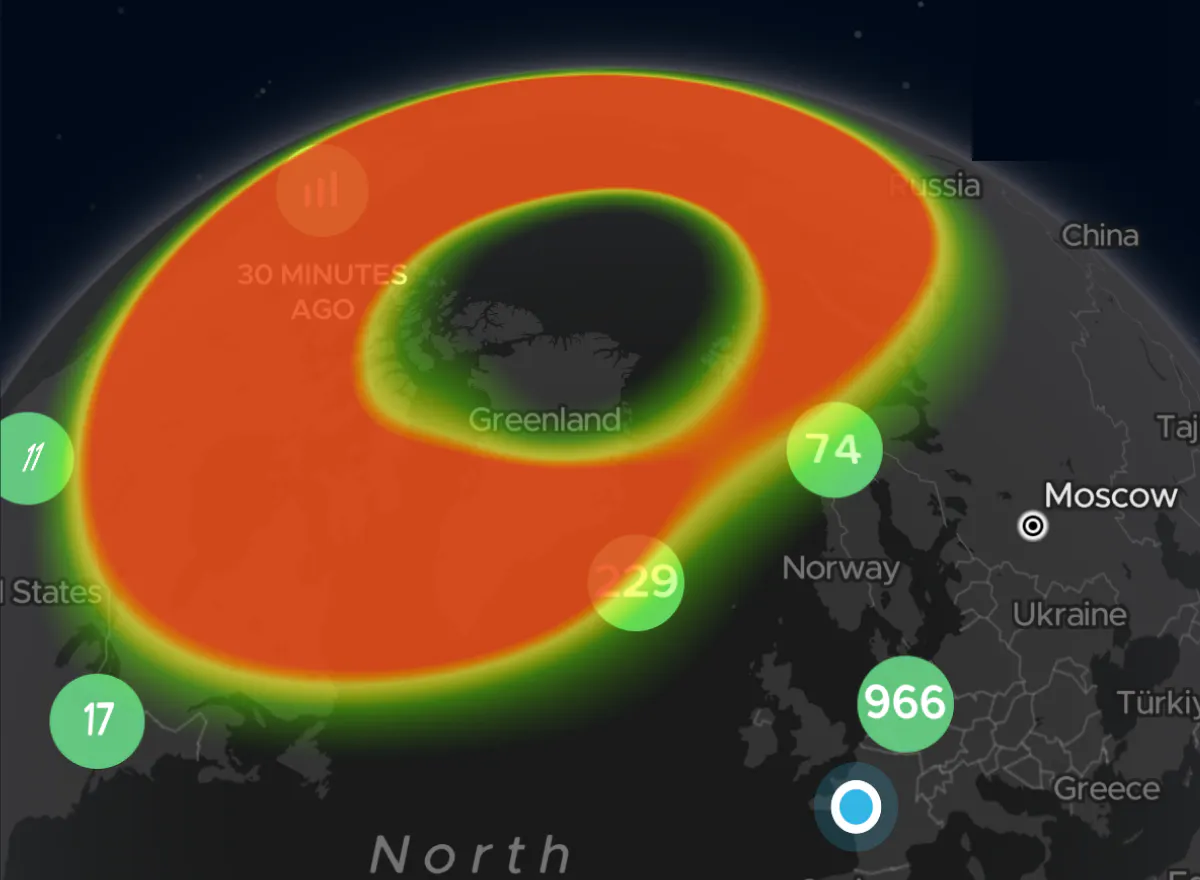
Sighting data logged by Hello Aurora app users shows that the peak viewing window depends on your destination:
- Finland: Sightings peak earliest, typically between 19:00 and 21:00 UTC
- Norway and Sweden: Most successful sightings occur between 20:00 and 21:50 UTC.
- Iceland: Prime viewing shifts later due to its western position, landing between 21:15 and 23:00 UTC.
You can check historical peak hours for your exact coordinates in the Hello Aurora app.
Because these windows are general guidelines, enable push notifications in the app. Local alerts notify you the moment the Northern Lights are spotted by users nearby so you do not miss sudden displays.
Frequently asked questions
Q: What is the best month for clear sky specifically?
A: March tends to offer the best mix of dark nights and calmer weather across Nordic destinations. Late September is a close second, before autumn storm set in.
Q: Can you see the Northern Lights in summer?
A: It is difficult but not impossible. People have seen them in central Europe in June 2025. But it is close to impossible in the usual aurora destinations. The midnight sun keeps the sky too bright to see the faint aurora glow.